Why Gen Z Is Rejecting the Corner-Office Mentor—And What Smart Organizations Are Doing Instead
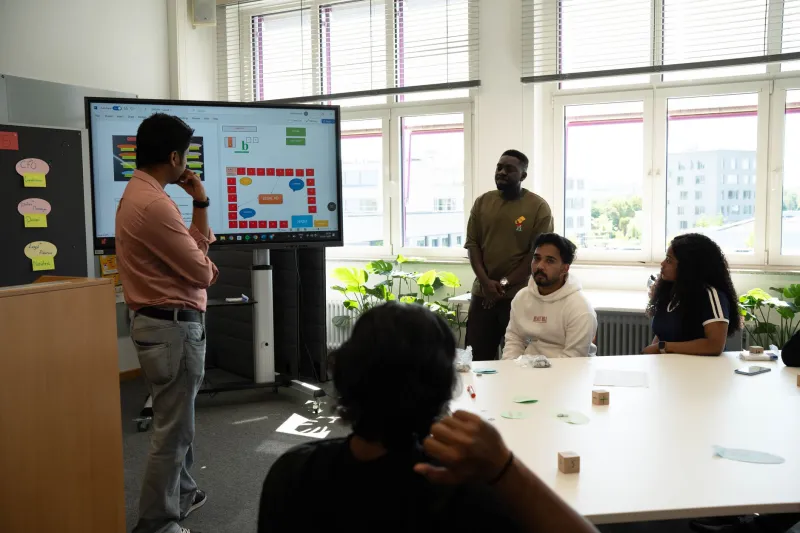
For decades, corporate mentorship followed a familiar script: a seasoned executive takes a promising junior employee under their wing, offering guidance shaped by years of accumulated experience. The model worked well enough for Baby Boomers and Gen X professionals who were socialized to respect institutional hierarchy and view seniority as a proxy for wisdom. But something has shifted—and organizations that ignore it are paying a measurable price in talent retention and workforce productivity.
Gen Z employees, those born roughly between 1997 and 2012, now represent the fastest-growing segment of the American workforce. By 2025, they are projected to account for nearly 27 percent of the global workforce, according to the World Economic Forum. And they are, by nearly every available measure, deeply dissatisfied with conventional mentorship structures.
The Structural Mismatch Between Traditional Mentorship and Gen Z Values
The friction is not simply generational stubbornness. It is rooted in how Gen Z professionals were educated, how they consume information, and what they fundamentally expect from a workplace relationship.
This cohort grew up in an era of crowdsourced knowledge, collaborative digital platforms, and on-demand learning. They learned to code from YouTube tutorials, solved problems in Reddit threads, and built skills through peer communities long before they entered a corporate office. The idea that a single senior leader holds all the relevant answers—and that knowledge flows exclusively downward—feels not just inefficient to them, but structurally dishonest.
A 2023 Deloitte Global Millennial and Gen Z Survey found that fewer than half of Gen Z respondents felt their managers genuinely understood their professional development needs. More telling, a significant portion reported that formal mentorship programs at their organizations felt performative—boxes checked on an HR calendar rather than meaningful investments in their growth.
The result is predictable: disengagement. And disengagement, left unaddressed, becomes turnover. The Society for Human Resource Management estimates that replacing a single employee can cost anywhere from 50 to 200 percent of that person's annual salary. For organizations with large Gen Z cohorts, the financial exposure from failed mentorship models is substantial.
What Peer Learning Networks Actually Look Like in Practice
The organizations gaining traction with Gen Z talent are not abandoning professional development—they are redesigning its architecture. Rather than assigning a mentee to a mentor and hoping chemistry emerges, they are building structured peer learning communities where knowledge flows laterally, contextually, and continuously.
Peer learning networks, at their most effective, share several defining characteristics. They are topic-driven rather than relationship-driven, organized around specific skills, challenges, or career transitions rather than seniority pairings. They are psychologically safe spaces where participants can ask questions without fear of appearing incompetent in front of a supervisor. And they are reciprocal—every participant is simultaneously a learner and a contributor, which aligns naturally with Gen Z's expectation of mutual exchange rather than one-directional transmission.
Companies like Cisco, Salesforce, and several mid-market professional services firms have experimented with cohort-based peer learning circles, internal community platforms, and cross-functional learning pods. Early data from these initiatives is encouraging. Internal surveys at several Fortune 500 organizations have shown peer learning participants reporting engagement scores 30 to 40 percent higher than employees enrolled in traditional mentorship programs. Retention rates among peer learning cohort members have, in some cases, outpaced control groups by double-digit percentages within the first two years of employment.
The Culture Shift Organizations Cannot Afford to Skip
Implementing peer learning networks is not simply a matter of launching a new platform or rebranding an existing program. It requires a genuine cultural reconfiguration—one that can feel uncomfortable for organizations with deeply embedded hierarchical norms.
Leadership must be willing to relinquish some control over the knowledge-sharing process. In a peer learning model, the most valuable insights may come from a third-year analyst who has recently navigated a specific technical challenge, not from a vice president whose hands-on experience in that domain is a decade old. Acknowledging this openly, and building systems that surface and reward distributed expertise, demands a level of institutional humility that not every organization is prepared to demonstrate.
Middle managers, in particular, often represent the most significant point of resistance. When peer learning networks thrive, they can appear to reduce the perceived value of managerial knowledge. Reframing the manager's role—from primary knowledge authority to learning facilitator and connector—is essential, and it requires deliberate investment in manager training and communication.
HR and learning and development teams also need to shift their measurement frameworks. Traditional mentorship programs are typically evaluated on participation rates and program completion. Peer learning networks demand more nuanced metrics: skill application rates, internal mobility outcomes, cross-functional collaboration frequency, and long-term retention data. Organizations that fail to establish these measurement systems early will struggle to justify continued investment, even when the qualitative impact is clearly positive.
Integrating Technology Without Losing the Human Element
Digital platforms have made peer learning networks significantly more scalable, particularly for distributed or hybrid workforces—a reality that now defines the majority of American professional environments. Tools that facilitate asynchronous discussion, skill tagging, and peer matching allow organizations to connect employees across geographies and time zones in ways that traditional mentorship programs simply cannot replicate.
However, the most effective implementations treat technology as an enabler rather than a substitute for genuine human connection. Peer learning communities that exist exclusively in digital forums often struggle to maintain momentum beyond the first few months. Organizations achieving the strongest results tend to blend digital infrastructure with periodic live interaction—whether virtual video sessions, in-person learning intensives, or structured project-based collaboration.
The key is designing for consistency and low friction. Gen Z employees will not sustain participation in a platform that requires excessive administrative effort or feels disconnected from their daily workflow. Embedding peer learning touchpoints into existing tools—communication platforms, project management systems, or internal learning management systems—dramatically improves long-term adoption.
Rethinking What Development Means for the Next Generation
The mentorship gap is real, but it is not insurmountable. What it demands is a willingness to examine the assumptions baked into conventional professional development and ask honestly whether those assumptions still serve the workforce organizations are actually trying to develop.
Gen Z employees are not disinterested in growth. Research consistently shows they rank professional development among their top priorities when evaluating employers. What they are rejecting is a specific delivery model—one built on hierarchy, passivity, and the presumption that experience always flows from older to younger.
Peer learning networks offer a fundamentally different proposition: that every professional, regardless of tenure, carries knowledge worth sharing, and that the most durable learning happens through active exchange rather than passive reception. For organizations committed to building engaged, capable, and loyal workforces, that proposition is not just worth exploring—it is worth building around.